
27.06.2026


Mark Novak
Author
The card question in arbitrage is far more consequential than it looks at first. Beginners assume any card will do. Experienced media buyers know that the wrong card choice costs not just money but ad accounts, and sometimes much more.
This guide covers how the payment toolkit of a media buyer actually works: which cards teams really use, where to get them legally, how to choose the right BIN, and why in 2026 drop card schemes have become riskier than ever.
Card Types Used by Media Buyers and How They Differ
In practice, arbitrage teams work with three card categories. The choice depends on the scale of operations, the GEO of the ad accounts, and the level of control required.
Physical Bank Cards
Standard debit or credit cards from real banks. Highest trust level from ad platforms because there is an identified person with a credit history behind the card. Good for account verification, initial warmup, and smaller budgets.
Main limitation: one BIN per card, bank-imposed limits, and no ability to scale. A team of 10 media buyers cannot operate efficiently on everyone’s personal cards.
Virtual Cards from Specialized Services
The primary tool for any team running arbitrage seriously. Services like PSTNET, Pay2House, or AdPay let you issue an unlimited number of cards in minutes, choose the BIN for a specific GEO, and dedicate one card per ad account.
There is a service fee, but it pays for itself on the first campaign at a real budget. Large-scale arbitrage does not work without this.
Drop Cards
Cards registered in someone else’s name in exchange for payment. In Ukraine this constitutes passing a payment instrument to a third party, which falls under financial crime statutes. Specific legal risks are covered in the final section.
Where to Legally Get Cards for Ad Payments in Ukraine and Abroad
The payment services market for arbitrage has grown substantially over the past two years. Real competition exists now and conditions have improved.

PSTNET
One of the most popular services among Ukrainian media buyers. Zero transaction fees, a card in one minute after registration, USD and EUR support. Accepts USDT and bank transfers. Cards work on Facebook, Google, TikTok, Apple, and Twitter. The first card can be issued anonymously.
Pay2House
Positioned specifically for media buyers and affiliate marketers. Top-ups via USDT, USD, and EUR with no hidden conversion losses. After registration and 2FA setup, you choose the BIN and GEO, fund the balance, and get the card. The whole process takes about one day.
AdPay
A service with $2/month maintenance and a 3.5% deposit fee, with volume discounts. Part of the SVG holding that also includes an antidetect browser and an arbitrage multitool. Has verified high-performing BINs for Facebook, Google, and TikTok.
Wise and Revolut
For those who need a legal physical card with a UK or EU BIN and maximum platform trust. Full identity verification makes them suitable for verification accounts and long-term operations. They do not scale well, but they are essential for the core of any payment structure.
Local Banks
Suitable for identity verification and domestic top-ups. A local BIN, however, is not ideal for linking to foreign ad accounts. Google generally accepts them fine. Facebook is less reliable with a UA BIN on cold accounts.
What Is a BIN and How to Choose One for Your Ad Account
BIN (Bank Identification Number) is the first 6-8 digits of a card number. It looks like just a string of digits, but the ad platform reads from it the country of issue, card type (debit/credit/prepaid), payment network, and issuing bank.
How BIN Affects the Ad Account
Facebook and Google check whether the billing country in the account matches the card issuance country. If the account has US billing but a UA BIN card attached, the platform elevates its verification level. This does not always result in a ban, but it increases the probability of a verification request or payment decline.
Debit vs Credit vs Prepaid
Credit cards have higher trust with Facebook than debit cards. Facebook frequently declines prepaid BINs on the first payment for a new account. When a service offers a choice between card types, choose credit or debit, not prepaid.
How to Check a BIN
Free tools bindb.com and bincodes.com show all information from the first 6-8 digits: country, bank, type, payment network. Check the BIN before linking a new card to any account. It takes 30 seconds and can save the account.
The Match Rule
The card BIN must match the account GEO. US account needs a US BIN. UK account needs a UK BIN. When ordering cards through PSTNET or Pay2House, specify the required country rather than picking at random.
How to Safely Top Up Cards and Withdraw Funds
The financial flow structure in arbitrage matters as much as BIN selection. Money should move on a predictable path, not chaotically.
The Safe Top-Up Flow
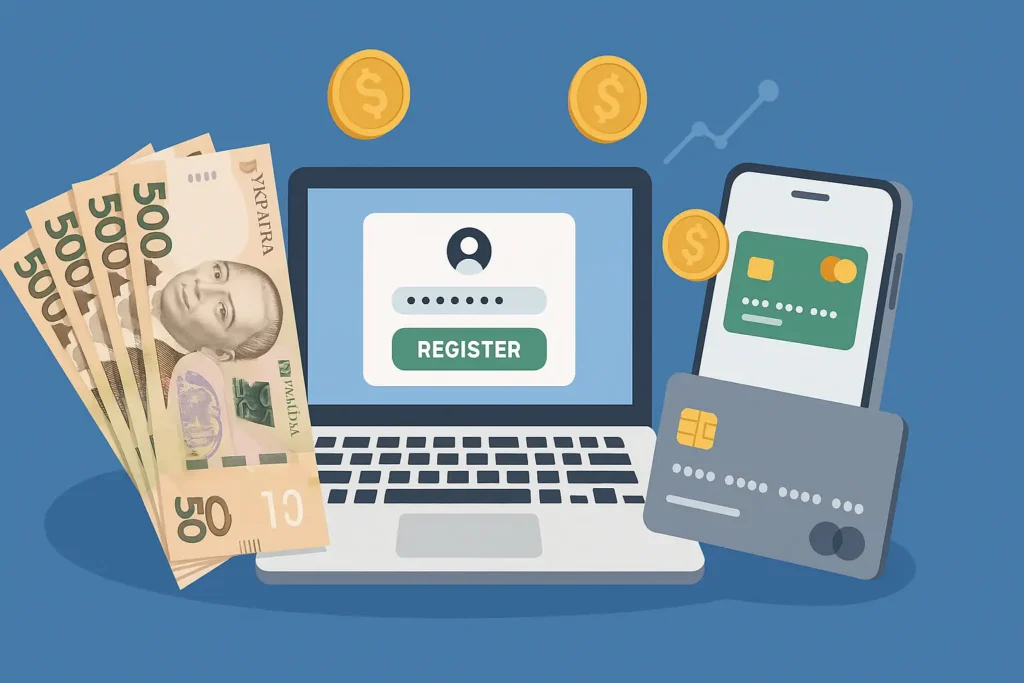
The correct chain: funds source (crypto, bank, business entity) -> buffer account (Wise or USDT wallet) -> top up the card service -> issue the card -> ad account. The buffer account isolates core capital from ad spend. If a card gets blocked with its balance, the rest of the funds stay untouched.
Gradual Spend Warmup
A new card should not see large transactions immediately. Start with small amounts ($10-50), let the account run for 3-5 days, then increase the budget gradually. New IP + new account + new card + $500/day from day one is a near-guaranteed autoban in most cases.
Buffer Balance on the Card
Keep enough balance on the card to cover the next automatic billing charge. Facebook and Google charge when the account hits a spending threshold. If the card has zero at that moment, the payment declines and the account moves into restricted access.
Withdrawing Funds
Withdraw profit through legal channels: P2P USDT, Wise, or a registered business account. Do not use someone else’s cards for withdrawals. Do not send large amounts without explanation to accounts unrelated to your business activity. Financial monitoring in Ukraine tightened significantly in 2025-2026.
Common Mistakes That Lead to Card or Ad Account Bans
Most bans in arbitrage are not random. They happen because of specific, repeatable mistakes that teams make again and again.
Card Mistakes
Zero balance when automatic billing runs is the most common cause of a technical ban. One card linked to multiple accounts creates connections between them: if one account gets banned, Facebook reviews all accounts sharing that same card. Prepaid cards on cold accounts get declined far more often than credit or debit BINs.
Account Mistakes
A sharp budget spike without warmup. If a new account launches a campaign at $300-500 per day immediately, the anti-fraud system treats it as an anomaly. Keep the first week at minimal spend even when funds and desire to move fast are both present. Frequent unexplained card changes, payments from different IP addresses, and ignored billing notifications are all documented paths to account restrictions.
Drop Card Risks and Alternatives in 2026
The drop card market in Ukraine remains active, but risks have risen sharply in 2025-2026. The legal framework is catching up and financial monitoring is tightening.
The NBU Drop Register
In October 2025, Ukraine’s parliament registered Bill No.14161 on creating a drop register – a database of individuals whose cards or accounts are used for suspicious transfers, money laundering, and P2P schemes. Being placed on this list means being unable to open a bank account, obtain credit, or use most financial services.
Criminal Liability
Article 209 of Ukraine’s Criminal Code (laundering of criminal proceeds) carries penalties of up to 12 years imprisonment. As of 2025, up to 20% of new bank cards in Ukraine are involved in drop schemes. Fraud losses grew by nearly a quarter to reach 1.4 billion hryvnias. Monitoring will only intensify.
What to Use Instead of Drop Cards
For solo media buyers: Wise or Revolut with full verification plus PSTNET for scaling. For teams: business entity accounts (LLC or sole trader) plus Pay2House or AdPay for unlimited card issuance across any GEO. The cost difference between legitimate tools and drop cards is minimal. The risk difference is not.
Key Takeaways
The payment structure in arbitrage is not a technical detail – it is part of the business model.
- Physical cards (Wise, Revolut, local banks) – for verification and warmup. Do not scale.
- Virtual cards (PSTNET, Pay2House, AdPay) – for large-scale campaigns. Unlimited issuance, any BIN and GEO.
- BIN = account GEO – no exceptions. Check via bindb.com before linking.
- Gradual warmup – start small, do not go straight to $500/day on a fresh account.
- One card per account – no shared payment methods between accounts.
- Buffer account – USDT or Wise between core capital and ad spend.
- Drop cards in 2026 – NBU register, criminal liability up to 12 years, all accounts blocked. Not worth it.
The legal toolkit takes a bit more effort to set up. It saves accounts, money, and – more importantly – reputation and freedom.
Mark Novak
Author
Similar articles by the author


Leave a comment
Thank you for your feedback!
Your review will be published after moderation.